
by Food Trade News Team
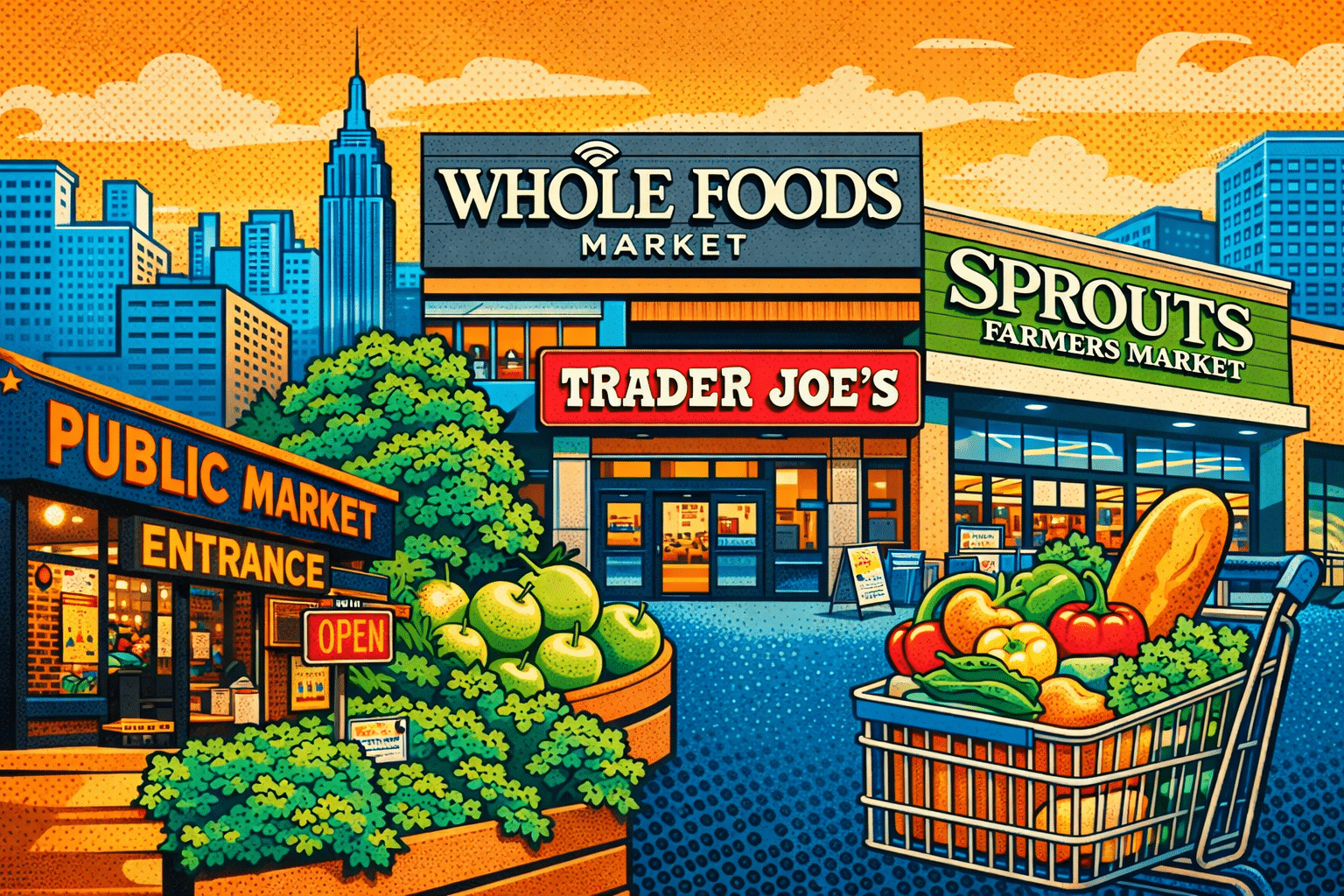
The Northeast grocery industry is headed down the winter stretch and prospects look exciting — and challenging, to say the least. As Maria Maggio reports here, the season is packed. Public officials are floating unprecedented retail experiments. Traffic growth is coming from households under the most pressure. Premium banners are expanding into some of the most saturated markets in the country. And value-forward disruptors continue to post the highest satisfaction scores in the business.
As the snow (finally) melts, the competitive lines are being redrawn in real time.
What follows is a look at the forces reshaping Northeast grocery this week — policy, traffic, expansion, and the brands betting they can win in one of the toughest retail arenas in America.
NYC Mayor Seeks $70M for City-Run Grocery Stores
New York City Mayor Zohran Mamdani is seeking roughly $70 million in funding to launch five city-run grocery stores – one in each borough – according to reporting by Gothamist and NDTV. The proposal would be administered through the city’s Economic Development Corporation and is framed as a “public option” for groceries aimed at lowering prices by reducing rent and property tax burdens. That said, this initiative comes as the city faces a projected multibillion-dollar budget gap and the prospect of tough tax hikes. Operational details, including staffing, sourcing, and pricing structure, have not yet been finalized.
Why it matters: If approved, this would represent one of the most, if not the most, aggressive municipal interventions into food retail in the country. For Northeast operators, the bigger question is one of precedent. A publicly funded competitor, even limited in scale, could reshape policy debates around pricing, food deserts and retailer margins in high-cost urban markets.
Grocery Growth Now Driven by Lower- and Middle-Income Shoppers
Placer.ai data shows that grocery traffic growth in 2026 is increasingly being propelled by lower- and middle-income households, who are making more frequent trips with smaller baskets amid ongoing cost pressure. According to the analysis, this segment – historically more budget-constrained – is now the biggest driver of grocery visit growth, while higher-income shoppers contribute less to overall visit increases. Shorter, more frequent shopping patterns also emerged as price-sensitive consumers adjust strategies to manage essential needs.
Why it matters: In big, relatively expensive Northeast markets like New York, Boston, and Philadelphia this trend is especially visible in short, mission-driven trips, including midday and quick fill-ins that benefit traditional grocers and value formats alike. Local data in Connecticut shows that chains with strong value propositions, like ShopRite and Costco to name a few, continue to capture steady daily visits amid competitive pressure on newer formats like specialty banners.
Whole Foods Signals Organic Grocery Momentum in Connecticut
Earlier this month, Whole Foods Market officially opened a new 42,000-square-foot store in Cheshire, Conn., marking the grocer’s 13th location in the state and the latest addition to one of the most competitive grocery markets in the country. Connecticut counts roughly 1,300 grocery operators statewide and therefore ranks among the nation’s highest in store density per capita. That’s a factor that keeps pricing sharp and forces constant differentiation.
The new Cheshire store features more than 1,000 locally sourced New England products spanning produce, artisan cheese, prepared foods and specialty grocery, reinforcing Whole Foods’ blend of national scale and hyper-local positioning. That local emphasis matters in a state where shoppers devote a measurable share of spending to Connecticut-grown and regionally produced items, and where established banners like Stop & Shop, Big Y, ShopRite, and Stew Leonard’s already compete aggressively on fresh and service.
Why it matters: Connecticut may be small geographically, but it punches above its weight economically — with CT Insider reporting higher-than-average household incomes and grocery spend that remains resilient even amid inflation. That combination makes it fertile ground for both premium formats and value players. From Wegmans’ Norwalk entry to Whole Foods’ continued expansion, operators are betting that shoppers here will reward quality and experience — but in a state this saturated, every new opening raises the competitive bar. When Whole Foods drops a new pin, it doesn’t just add square footage; it forces nearby operators to clarify what they’re defending: price leadership, fresh authority, local authenticity or trip convenience.
Trader Joe’s Northeast Moves Pose a Challenge
As we noted earlier in February, Trader Joe’s has officially (though perhaps not uncontroversially) been named America’s top-rated grocery store in the 2026 American Customer Satisfaction Index. In the Northeast, where Trader Joe’s presence is among its densest, the brand’s popularity has translated into visible expansion: early 2026 saw new store openings in Hamden, CT and Miller Place, NY, while more pipeline locations across the region are reportedly moving forward.
Why it matters: For conventional and regional grocers in the Northeast, Trader Joe’s dual pull – its high satisfaction scores and tangible footprint growth – is a competitive challenge. It underscores the premium shoppers place on curated assortment, value perception, and in-store experience, challenging incumbents to sharpen private-brand performance and visit frequency strategies in markets where trip diversion can erode core loyalty.
Sprouts Doubles Down on Growth, Loyalty and Northeast Grocery Footprint
Sprouts Farmers Market is reading from an ambitious playbook for 2026 – one that blends expansion, executive restructuring, and customer engagement initiatives amid a challenging sales environment. After reporting softer comp sales late in 2025, the specialty grocer is accelerating store growth; it’s planning 40+ new locations this year following 37 openings in 2025. There exists an active pipeline with more than 140 approved sites and 95 executed leases, many of which are set for the Northeast and Mid-Atlantic markets.
Sprouts also announced a pair of significant leadership changes with Amanda Rassi named its first Chief Customer Officer and Don Clark stepping in as Chief Merchandising Officer, roles crafted to sharpen the chain’s personalization, loyalty and assortment strategies, crucial as price sensitivity rises among shoppers. Meanwhile, its first New York store in Centereach, Long Island is already open and future units planned for Smithtown and Levittown reflect deeper Northeast commitment.
Why it matters: Specialty formats like Sprouts thrive where consumers trade up for fresh, natural and organic options, but today’s macro backdrop, with sticky inflation and thin transaction growth, tests that model. Northeast operators watching Sprouts will see a mix of footprint momentum, fresh customer insight investment, and strategic leadership shifts as signposts for how value-plus-experience grocers are navigating a price-conscious era.


